
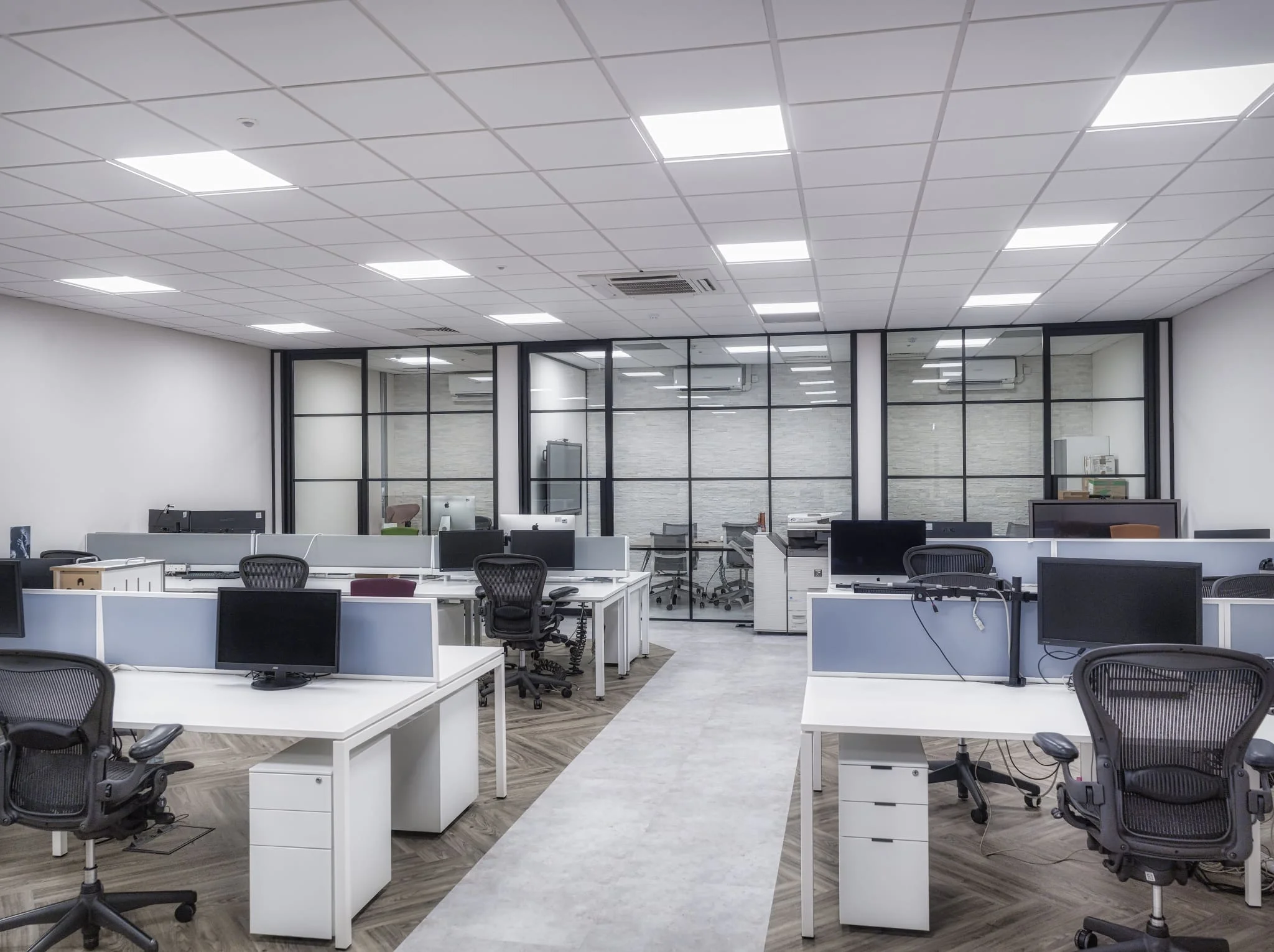
Remember those grey cubicle farms from the 1980s? Row upon row of identical beige boxes where workers sat like battery hens, separated by fabric-covered walls? Thank goodness we’ve moved on!
Office design has undergone a remarkable transformation over the decades, evolving from rigid, hierarchical layouts to dynamic, human-centred spaces that recognise how people work.
Here’s an overview of office design through the ages and how successful businesses have come to prioritise their working environments.
From Mad Men to Open Plans: The Journey So Far
The story of modern office design begins in the 1960s, when the “office landscape” concept first challenged traditional office design thinking.
Instead of private offices for executives and typing pools for everyone else, forward-thinking companies started experimenting with open-plan layouts that promised better communication and collaboration.
By the 1980s and 90s, the cubicle had become king. Office fit-out companies were installing thousands of modular workstations, creating what seemed like efficient use of space but often felt more like worker processing facilities. The focus was on cramming as many people as possible into the available square footage, with little thought for wellbeing or productivity.
The dot-com boom of the late 90s and early 2000s shook everything up. Suddenly, office design became a recruitment tool. Top talent didn’t want shoddy, uncomfortable workplaces.
Companies competed to create the most innovative workspaces, introducing everything from slides and ping-pong tables to nap pods and beer taps.
Google has been known for rolling out some of the craziest office designs, featuring everything from a caravan snug in Amsterdam to hammocks and biophilic designs that look like jungles.
Some of these innovations stuck around; others were retired when the novelty wore off!
Today’s Office Design Revolution
Contemporary office design has matured beyond the flashy gimmicks of the early tech era – although creativity remains vital.
Now, we combine insights into human psychology with practical business requirements, creating spaces that support both individual and collective focus.
A few key trends have lasted the ages:
● Biophilic design that brings nature indoors through plants, natural materials, and organic shapes
● Activity-based working where different areas support different types of tasks
● Flexible furniture and modular layouts that adapt to changing team sizes and work styles
● Technology integration that supports hybrid working patterns
Office space planning now considers the full spectrum of work activities, from deep concentration to creative brainstorming to casual conversations.
Rather than forcing everyone into identical workstations, thoughtful design provides variety – quiet zones for focused work, collaborative areas for team projects, and social spaces for the informal interactions that drive innovation.
Biophilic designs are front and centre of most contemporary office fit out projects. Research consistently shows that incorporating natural elements, such as living walls, natural lighting, or organic materials, can reduce stress, enhance cognitive function, and increase job satisfaction.
Technology Integration Becomes Essential
Don’t forget best-in-class technology – because a beautiful office is nothing with shoddy WiFi.
Office innovations now integrate robust, secure Wi-Fi infrastructure, flexible power solutions, and conference and breakout rooms with dedicated tech.
Commercial office refurbishment projects increasingly focus on future-proofing spaces whilst creating environments that feel warm and human rather than sterile and tech-heavy.
Designing Offices for the Long Term with Spaceway
Trends come and go, but successful spaces will always prioritise human wellbeing.
While the specific solutions change – from cubicles to open plans to hybrid spaces – the core challenge remains the same: creating environments where people can do their best work whilst feeling valued and comfortable.
At Spaceway, we’ve watched office design trends come and go, while focusing on the fundamentals that never change – brilliant lighting, flexible layouts, and spaces that support wellbeing.
Contact Spaceway to discuss how thoughtful office design can transform your workspace into a competitive advantage that attracts talent and drives productivity.