
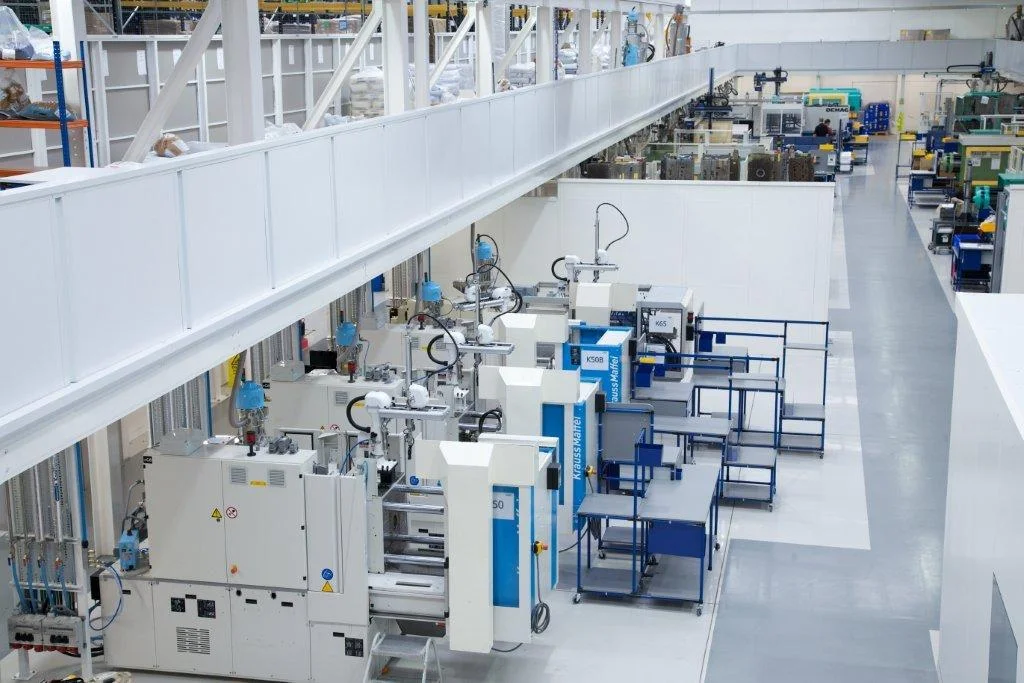
Effective workspace design is about creating an environment that enhances employee wellbeing and productivity, ensures safety and boosts efficiency.
The question, as ever, is how is this achieved?
Read on to learn how to optimise production and manufacturing spaces to achieve these goals.
Key Elements of Effective Manufacturing Space Optimisation
First, it’s time to analyse your existing space:
- Before making changes, check your current workflow to identify bottlenecks, unnecessary movement and congestion.
- Use this information to create a layout that promotes a logical flow of materials and personnel.
- Pay particular attention to the movement of both people and materials. The goal is to minimise cross-traffic and long distances between related workstations.
- You can also use visual management techniques like floor markings and signage to guide movement and indicate storage areas, walkways and work zones.
This gives you a solid starting point for developing a safer, more productive space.
Maximising Interior Space
Make the most of your available space by considering vertical storage solutions, such as mezzanine floors or high-bay racking systems. These can increase your usable floor space without expanding your physical footprint.
You should also consider flexible workstations that can be easily reconfigured to accommodate different production needs. Use modular furniture and equipment that can be moved or adjusted as required.
Finally, access to power outlets, cabling, and equipment replacement should be considered to reduce tripping hazards from cables and hoses.
Ergonomics and Comfort
Prioritise employee comfort to reduce fatigue and increase productivity. Ideally, provide adjustable workstations to accommodate different heights and preferences.
Ensure proper lighting to reduce eye strain and prevent accidents. Install anti-fatigue mats in areas where employees stand for long periods.
Clear Communication and Signage
Signage is an often overlooked aspect of safety and efficiency. Use clear, consistent signs for safety instructions, workflow directions, and equipment operation guidelines.
This will enhance safety and improve efficiency by reducing confusion and errors.
Safety Considerations and Compliance with Regulations
Let’s address safety in greater detail, as it’s fundamentally important.
The Health and Safety at Work etc. Act 1974 provides the framework for workplace safety. When optimising your manufacturing space, consider these specific requirements:
- Risk Assessment: Conduct and regularly update risk assessments for all areas and processes.
- Fire Safety: Ensure clear fire exits, proper signage, and regularly tested alarm systems as per the Regulatory Reform (Fire Safety) Order 2005.
- Personal Protective Equipment (PPE): Provide appropriate PPE and ensure its proper use as required by the Personal Protective Equipment at Work Regulations 1992.
- Machine Safety: Install proper guarding on machinery and implement lockout/tagout procedures in line with the Provision and Use of Work Equipment Regulations 1998 (PUWER).
- Noise Control: Implement noise reduction measures to comply with the Control of Noise at Work Regulations 2005.
- Hazardous Substances: Properly store and handle hazardous materials according to the Control of Substances Hazardous to Health Regulations 2002 (COSHH).
That’s not to say each and every one of these regulations will apply to your workplace – but, even so, identifying which pertains to your environment is mandatory.
Optimise Your Space with Spaceway
Ready to optimise your manufacturing space for maximum efficiency and safety?
Spaceway specialises in transforming production and manufacturing environments.
With over 50 years of experience, we offer free surveys and bring expertise in mezzanine floors, office interiors and light industrial fit-outs.
Our team can help you maximise your space use, improve workflow and ensure compliance with safety regulations.
Contact Spaceway today to start your project and discover how we can help you create a workspace that works for you.