
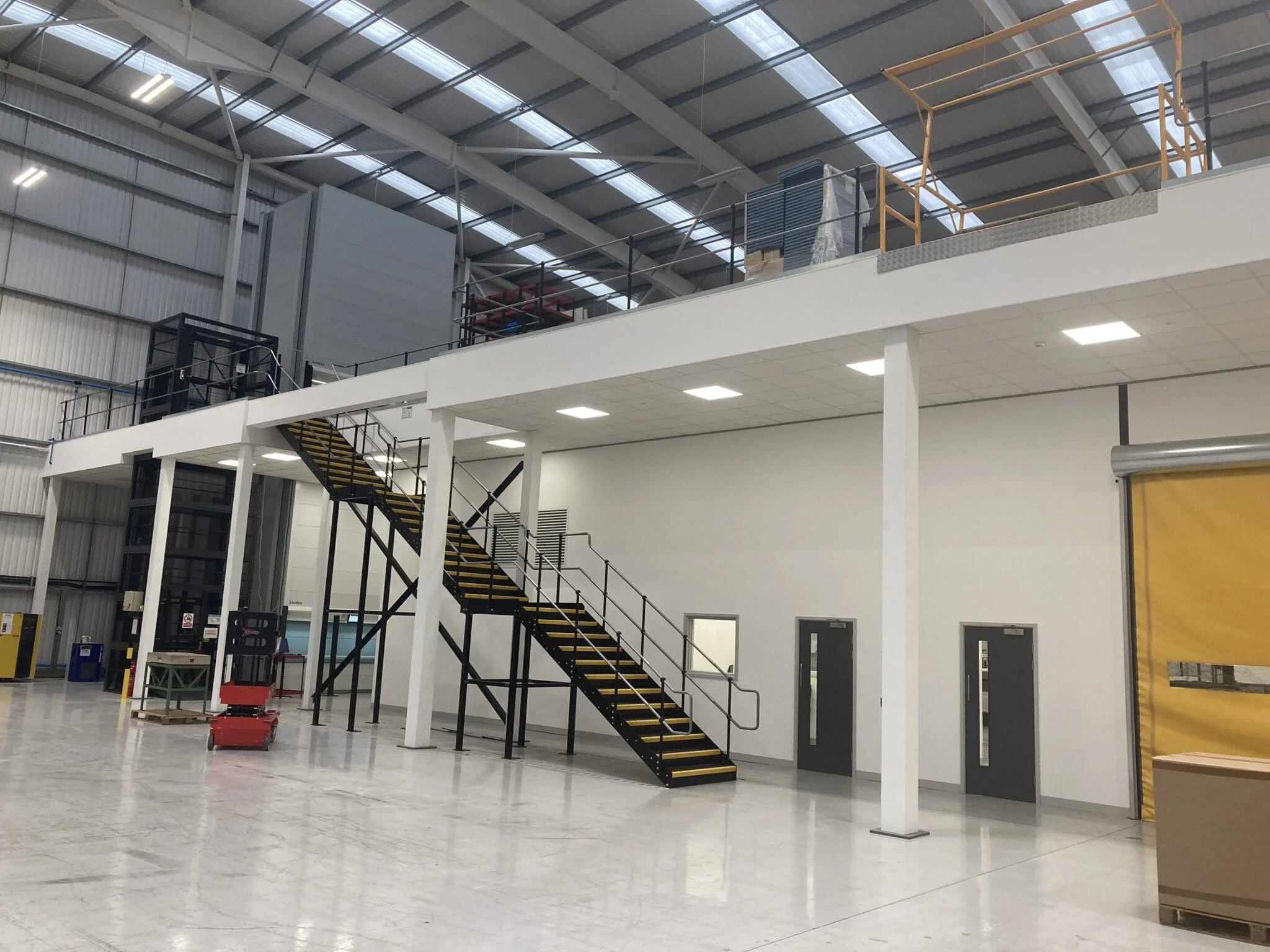
Installing a mezzanine floor in a production facility isn’t like adding one to a warehouse.
You might be supporting machinery, managing workflows in which materials move between levels, and creating platforms that can handle industrial loads.
Get the design wrong, and you’ll spend money fixing problems or working around a mezzanine that doesn’t achieve what you need.
Here’s what matters when you’re designing an industrial mezzanine floor for manufacturing.
Load Requirements Come First
Load is absolutely key when designing any mezzanine floor. Machinery weight, material storage, staff movement, and future equipment all contribute to load requirements.
Structural engineers work with distributed loads (weight spread across the floor) and point loads (concentrated weight in specific areas).
Heavy machinery creates point loads needing additional support. Storage with pallet racking creates distributed loads across larger areas.
Workflow Integration
Excellent mezzanine flooring materially improves production operations. Ask, how do materials move through your facility? Where do bottlenecks occur? What would make operations smoother?
We’ve designed mezzanines where production takes place on the ground floors whilst materials feed machinery from above, for example.
Access and Safety
Staircase access to mezzanines follows building regulations Part K for industrial stairs or Part M for DDA-compliant stairs if disabled access is required.
Handrails, kick plates, and edge protection prevent falls. Fire escape routes must also meet building regulations, while good lighting must also be compliant, preventing accidents and supporting quality work.
Machinery and Services
Production mezzanines often support machinery needing power, compressed air, data connections, or ventilation. Plan services during design rather than retrofitting down the line.
This will involve factors such as electrical supply and cable routing, which should allow maintenance access without disrupting production. Machinery creating heat or fumes needs ventilation that doesn’t affect other areas.
Floor vibration is another key consideration. Some equipment creates vibration, thus requiring isolation mounting or additional bracing.
Planning for Changes
Manufacturing operations evolve over time. A mezzanine offers you additional, flexible floor space without overhauling your premises.
We’ve designed and installed mezzanine floors for manufacturing facilities for over 50 years and counting. Understanding production requirements, workflow, and load needs before designing means solutions that improve operations rather than adding space alone.
Contact Spaceway to discuss your production space.