
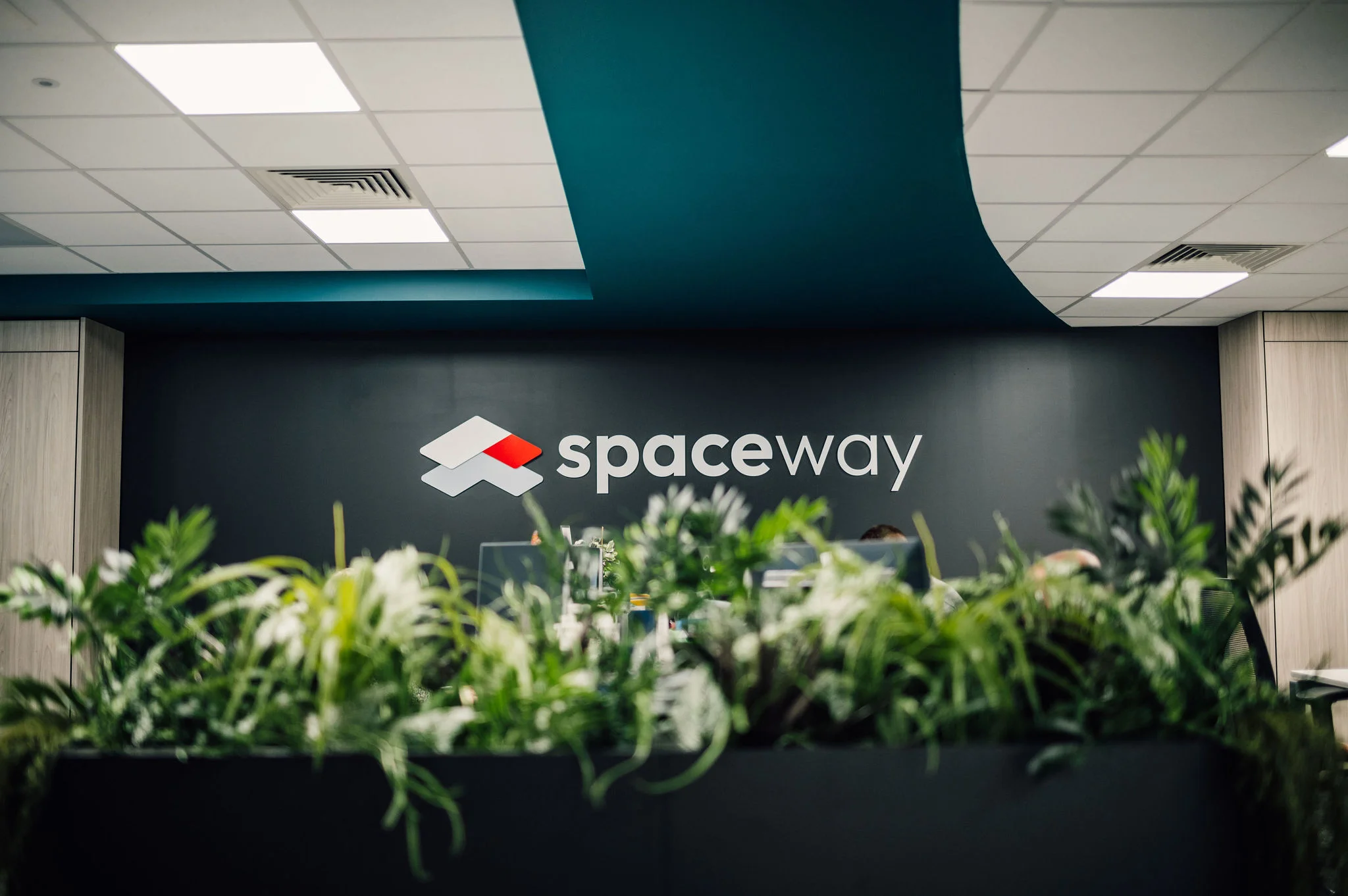
In 2026, Spaceway celebrates 50 years in the workspace design industry. A lot has changed since 1976.
The places we work have been transformed by technology, changing attitudes to employee wellbeing, and entirely new ways of thinking about how to create productive, comfortable workspaces.
Looking back at five decades of workspace evolution is a chance to appreciate how far we’ve come – and to consider where we’re heading next.
The 1970s: Where It All Started
When Spaceway was founded, office design was changing rapidly. The era of cellular offices and early cubicles was beginning.
The first ergonomic office chair, the Ergon, appeared in 1976. It was a small yet tangible revolution – the idea that furniture should support the person using it.
In industrial settings, businesses were starting to recognise the value of vertical space.
Mezzanine floors were becoming more common in warehouses and factories, offering a practical way to expand capacity without relocating. The foundations of modern workspace design were being laid.
The 1980s: Technology Arrives
The personal computer changed everything. Suddenly, offices needed space for bulky monitors, keyboards, and miles of cabling. Raised floors and suspended ceilings became standard features to accommodate all this new infrastructure.
This was also the decade of the cubicle farm. What started as a well-intentioned attempt to give workers privacy became, in many cases, a cost-cutting exercise – linear rows of identical workstations designed to pack in maximum headcount. Clean lines and industrial materials dominated.
In the warehouse sector, vertical reciprocating conveyors appeared in the early 1980s, automating the movement of goods between levels.
The 1990s: Flexibility Takes Hold
The 1990s brought laptops, email, and the early internet. Desks shrank with the technology itself. Then hot-desking emerged as companies recognised that not everyone needed a permanent workstation.
This is also when massive tech companies like Google, Microsoft, etc, sprang up. Workplace design became a means to compete for the best talent. Technology companies started investing millions into workplace R&D.
The 2000s: Work Goes Digital
Mobile phones and wireless technology freed workers from their desks entirely. Storage went digital, and workstations could shrink further. The concept of agile working emerged – the idea that different tasks require different environments.
Office design started reflecting the company culture and brand more. Spaces became lighter, airier, and more deliberately designed to attract and retain talent.
Industrial spaces evolved too, with intelligent designs that promoted wellbeing, comfort, and safety.
The Management of Health and Safety at Work Regulations 1999 placed risk assessment at the core of workplace planning, requiring employers to actively identify and mitigate hazards rather than simply react to incidents.
The Workplace (Health, Safety and Welfare) Regulations – updated in 2002 – set clear standards for ventilation, lighting, temperature and space in factories and warehouses.
The 2010s: Wellbeing and Purpose
In the recent past, workspace design stopped revolving solely around efficiency and started focusing on people. Biophilic design – bringing natural elements into workspaces – gained traction.
The boundaries between office and home environments have also blurred, with comfortable furniture, warm colours, and amenity spaces becoming standard features.
The 2020s: Everything Changes
The pandemic transformed workspace design dramatically. Remote work became ubiquitous, and when people returned to offices, they expected quality spaces that made commuting worthwhile.
Industrial spaces have also become more inventive in how they deliver a comfortable working environment, putting more distance away from the utilitarian, starkly lit warehouse spaces of years gone by.
What We’ve Learned
Change is constant. The workspaces of 2026 would be unrecognisable to someone from 1976 – and the workspaces of 2076 will likely seem equally alien to us.
But some principles endure. Understanding how each business works, balancing utility with individual needs, and making the most of available space, whether that’s through smart office layouts or mezzanine floors that unlock unused vertical capacity.
We’ve spent five decades helping businesses across the country make the most of their workspaces.
Here’s to the next fifty years!
If you’re thinking about how to make your workspace work harder, feel free to get in touch for advice or a free consultation.