
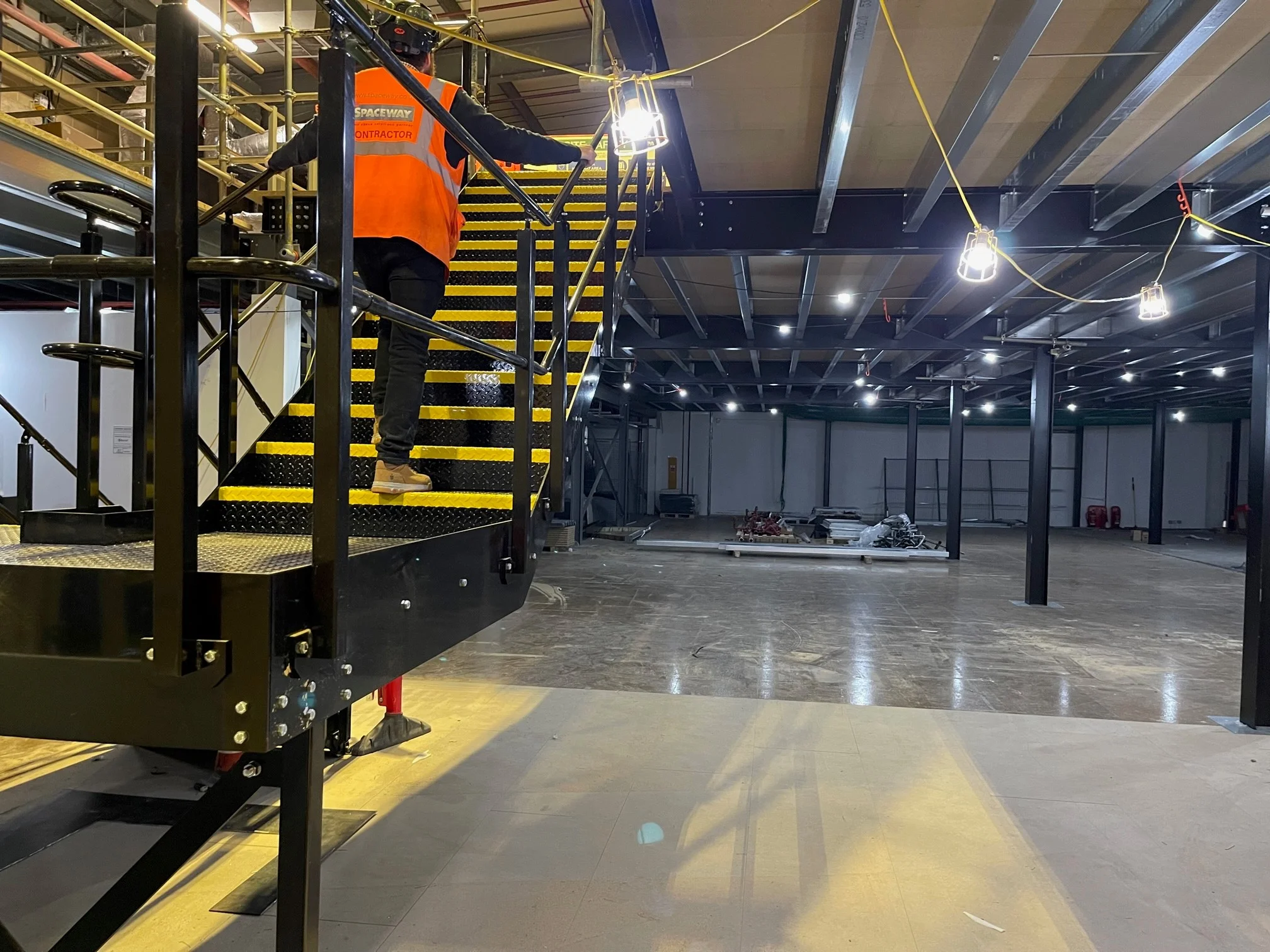
Mezzanine floors are one of the most cost-effective ways to expand your workspace without relocating.
However, before committing to an installation, most businesses have questions about regulations, what’s involved, and whether it’s right for their situation.
Read on for our top mezzanine floor FAQs.
Do I Need Planning Permission?
In most cases, no. Mezzanine floors are semi-permanent internal structures, so they don’t usually require planning permission from your local authority.
There are exceptions, though:
- Retail mezzanines over 200m² need planning permission under legislation controlling out-of-town retail development
- External alterations, such as adding windows or doors to accommodate the mezzanine, can trigger planning requirements
- Change of use – if the mezzanine changes how the building is used (adding office space to a warehouse, for example), you may need permission
If you’re unsure whether your project falls into these categories, you will need to work closely with the local authorities.
What About Building Regulations?
All mezzanine floors require building regulations approval, regardless of size or use. This is separate from planning permission and covers the structural safety and design of the installation.
You’ll need to submit your application to a building control body – either your local council or an approved private inspector. The application typically includes structural drawings, load calculations, and details of the intended use.
Building regulations cover several key areas under The Building Regulations 2010:
- Part A – Structural integrity: Ensuring the floor can handle expected loads safely
- Part B – Fire safety: Escape routes, fire protection, and materials
- Part K – Protection from falling: Staircases, handrails, and edge protection
- Part M – Access: Wheelchair access and accessibility requirements
How Much Weight Can a Mezzanine Floor Hold?
Load capacity depends entirely on the intended use and is calculated in kilonewtons per square metre (kN/m²). Different applications require different specifications. As a general rule of thumb:
- Office use: 3.5 kN/m² (350kg per square metre)
- Light storage: 4.8 kN/m² (480kg per square metre)
- General storage: 7.2 kN/m² (720kg per square metre)
- Heavy industrial: 9.6 kN/m² or higher for machinery and heavy equipment
Many businesses opt for a higher specification than they immediately need. You can’t easily upgrade a mezzanine once installed, so building in capacity for future use makes sense.
Does My Mezzanine Need Fire Protection?
It depends on how you’re using it. Fire protection requirements under Part B of the Building Regulations apply if:
- The mezzanine is used for purposes other than storage
- It covers more than 50% of the building’s floor area
- It extends more than 20 metres in either direction
- People will be working on the floor regularly
If fire protection is required, you’ll typically need one-hour fire-rated cladding on the underside of the floor and column casings, and a protected escape route with fire doors.
Buildings with existing sprinkler systems may have reduced requirements.
Storage-only mezzanines with limited personnel access are often exempt, though this depends on size and layout.
What About Disabled Access?
Part M of the Building Regulations covers accessibility. If your mezzanine will be used for offices, production, or any purpose where people work regularly, disabled access needs considering at the design stage.
Storage-only mezzanines used by limited personnel generally don’t require disabled access, but this varies depending on your building and local authority requirements. The key principle is that a mezzanine shouldn’t make your building less accessible than it currently is.
Options include platform lifts or allowing for future lift installation if immediate provision isn’t practical.
How Long Does Installation Take?
The whole process – from initial enquiry through design, approval and installation – typically takes four to six weeks. Installation itself is usually measured in days rather than weeks for standard projects.
We plan installations to minimise disruption to your business. The work area needs cordoning off for health and safety, and ideally should be clear of stock and equipment, but we can work around operational requirements where needed.
What Can I Use a Mezzanine Floor For?
Mezzanine floors are versatile and can serve many purposes:
- Additional storage to free up ground floor space
- Office accommodation above warehouse or production areas
- Production and manufacturing space
- Retail floor space for stock or customer areas
- Staff facilities like break rooms or meeting spaces
The intended use affects everything from load specifications to fire protection and accessibility requirements, so it’s important to be clear about how you’ll use the space from the outset.
Can I Relocate a Mezzanine Floor Later?
Yes. Because mezzanine floors are freestanding structures rather than permanent building alterations, they can be dismantled and relocated if you move premises. This makes them a sensible investment even if you’re not in your forever building.
What Happens Next?
If you’re considering a mezzanine floor for your business, the best starting point is a site survey. We’ll assess your space, discuss how you want to use it, and advise on specifications, regulations, and realistic timescales.
Get in touch with Spaceway to arrange a free survey and talk through your project.