
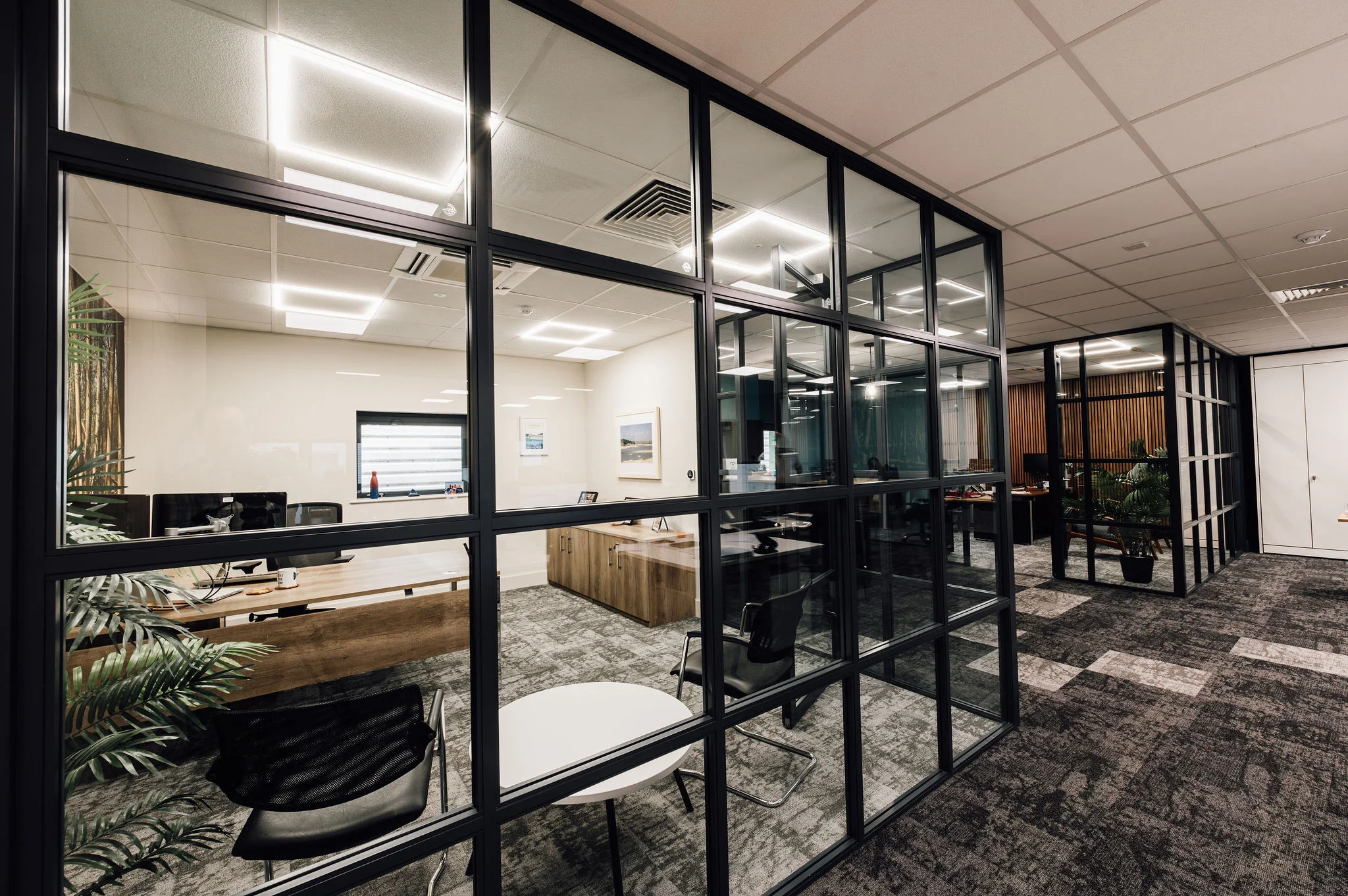
Workspace design is certainly not just about aesthetics – it fundamentally influences employee productivity and well-being.
As Jane Henley, CEO of the World Green Building Council, explains: “The evidence linking good office design and improved health, wellbeing and productivity of staff is now overwhelming. There is unquestionably a clear business case for investing in, developing and occupying healthier, greener buildings.”
Numerous factors combine to create highly functional, productive workplaces, from lighting and geometry to interior design, acoustics, and spatial ergonomics.
In the blog, we’ll explore how intelligent design can transform your workspace and provide practical solutions so you can create the most comfortable, productive environments possible.
Optimising Natural Light
One of the leading aspects of modern office design is integrating natural light into a space.
Research consistently shows that natural light in the workplace enhances mood, reduces eye strain, and improves sleep quality, boosting employee productivity.
When natural light cannot illuminate a room, lighting becomes absolutely critical. Soft, warm lighting is often beneficial for office spaces, meeting rooms, and collaborative areas.
On the other hand, brighter white light can benefit manufacturing zones where clarity of sight and concentration are maximally important.
Spaceway uses these principles to create quality office designs and promote a healthier, more productive working environment.
The Ergonomics of Productivity
A key feature of effective workspace design is ergonomics.
Comfortable, adjustable furniture and thoughtfully arranged spaces can significantly reduce the risk of musculoskeletal disorders, among the leading causes of sick days.
Ergonomic furniture is particularly important for office spaces or communal areas where people sit for longer periods of time, but it’s also essential in manufacturing or construction zones where employees need comfortable seating for breaks and downtime.
Air Quality and Thermal Comfort
Air quality and thermal comfort in an office are crucial yet often overlooked aspects of office design.
Research from the Harvard T.H. Chan School of Public Health found that well-ventilated offices with lower indoor pollutants and carbon dioxide levels are associated with higher concentration.
Furthermore, maintaining an office temperature that employees can control can improve productivity. Not to mention that adequate and stable temperatures are a legal requirement.
Spaceway designs systems that meet these specifications, creating an optimal working environment that enhances efficiency and focus.
Incorporating Smart Office Innovations
With the rise of technology, integrating smart office innovations is increasingly relevant.
Automated systems for lighting, climate control, and even window shades can significantly enhance the working environment and, by extension, productivity.
Spaceway incorporates these technologies to ensure that workspaces are efficient and future-proof, aligning with the latest trends in modern office design.
Summing Up
A workspace’s strategic design can profoundly affect employees’ productivity, health and well-being.
By focusing on natural lighting, ergonomics, air quality, and the flexibility of the workspace, Spaceway creates environments that help businesses thrive.
For companies looking to refurbish their offices or create new, productive spaces, Spaceway caters to your needs.
View our portfolio of design projects here or contact us today to start building a more productive, comfortable space for you and your business.