
Businesses facing space shortages too often default to searching for new premises. It’s fair enough. Bigger warehouse, larger office, more square footage, right? The logic seems sound.
However, relocation costs far exceed most businesses’ expectations, and the disruption runs deeper than many assume. Downtime is extremely costly if it impacts the bottom line.
Space optimisation – making smarter use of what you already have – is always worthwhile exploring.
The Cost of Moving Commercial Space
The cost of moving your business is two-fold:
- Lease break costs, legal fees, removal expenses, new signage, updated stationery, redirected mail. It all accumulates quickly.
- Then you lose trading days during the move itself, staff productivity drops whilst everyone adjusts to the new location, and clients struggle to find you.
As a rough guide, a company paying £50,000 annually for warehouse space might face £100,000 in relocation costs before signing the new lease. That’s two years of your current rent merely to move to a different building.
If you manufacture, then the risks compound further. And as anyone already knows from moving house, the deal isn’t done once the boxes come off the vans. There’s only the small matter of setting everything up in the new space.
The Big Opportunity: Vertical Space
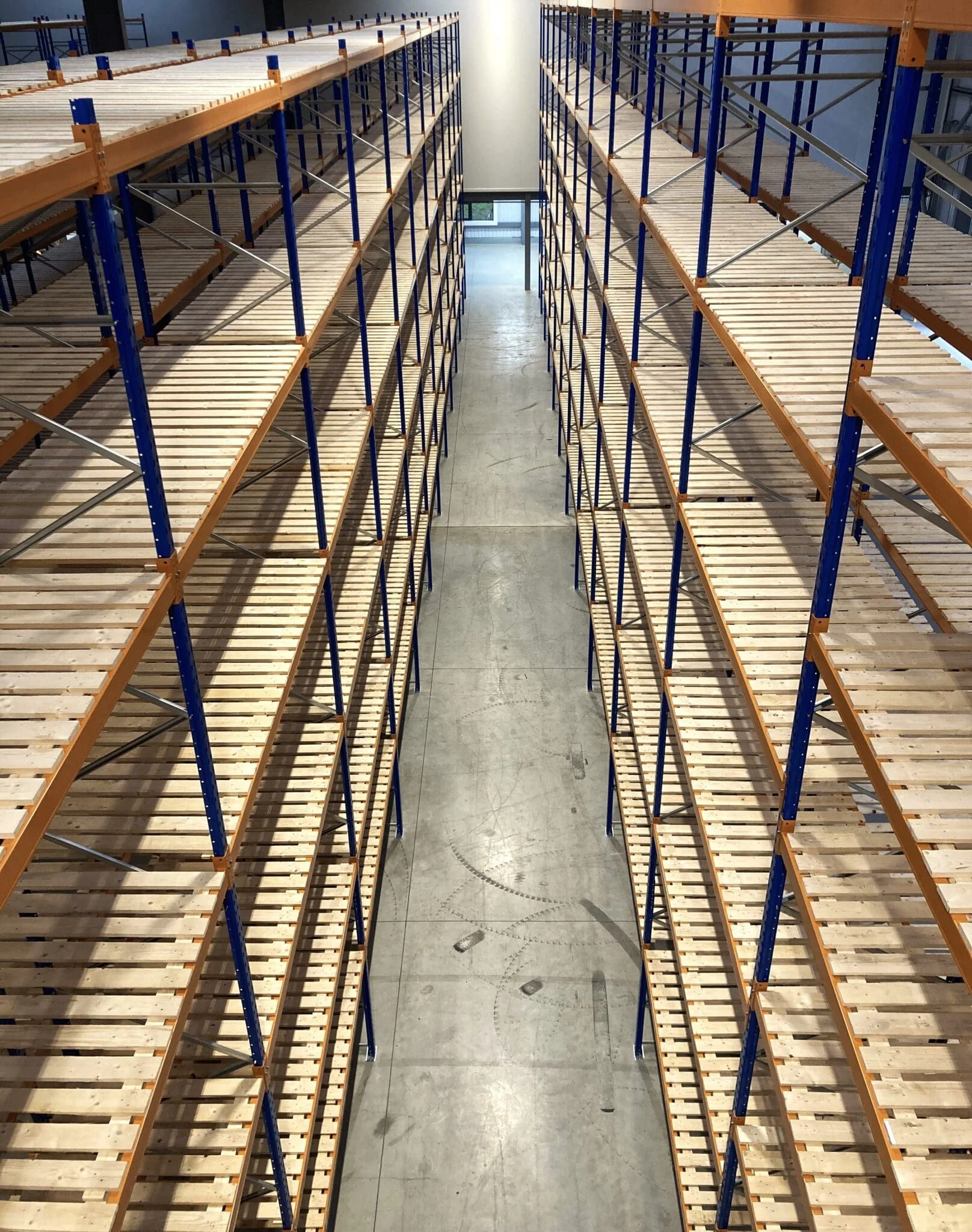
Most commercial buildings use floor space efficiently, but ignore the cubic metres above head height.
Standard warehouses have 6-8 metres of ceiling height, which represents significant unused capacity.
Mezzanine floors transform vertical space into usable area without expanding the building’s footprint:
- Can effectively double your space – ground floor remains whilst gaining an entire upper level
- Installation takes weeks rather than months of upheaval
- Operations can often continue simultaneously
- Adds offices, storage, or production areas within your existing building
The key factors are that disruption is minimal compared with relocating the premises, and costs are significantly lower.
Other options include smart modular storage, upgraded racking for stock and materials, and enhanced flow between key areas through improved positioning and wayfinding.
For offices, a refurb can deliver a more modern workplace with specialist floor coverings, temperature and humidity control systems, flush-glazed partitioning, suspended ceilings, air filtration systems, flush-fit doors, and mezzanine floors.
Maintaining Continuity
There are numerous ‘hidden’ benefits to staying put and refurbishing your existing space. For example, clients know where to find you, and your suppliers have reliable delivery routes.
These sound trivial until you move and learn your new industrial estate has terrible access during rush hour. Or the loading bay is too narrow for your lorries. Or staff face an extra 40 minutes each way on their commute.
Commercial refurbishment retains the leading benefits of your original premises. You can improve on what you have, thus increasing your property’s short-term and long-term value while swerving the hidden risks of relocation.
Optimising Without Moving With Spaceway
At Spaceway, we’ve spent nearly five decades helping businesses maximise their existing facilities through mezzanine floors, warehouse fit-outs, and commercial refurbishment.
Economic uncertainty makes businesses cautious about long-term lease commitments – and rightly so. Optimising existing space requires less capital than relocating, delivers results faster, and carries less risk.
We work across industrial, office, retail, and education sectors to create that capacity without the disruption and expense of relocation.
Contact us to discuss optimising your space.